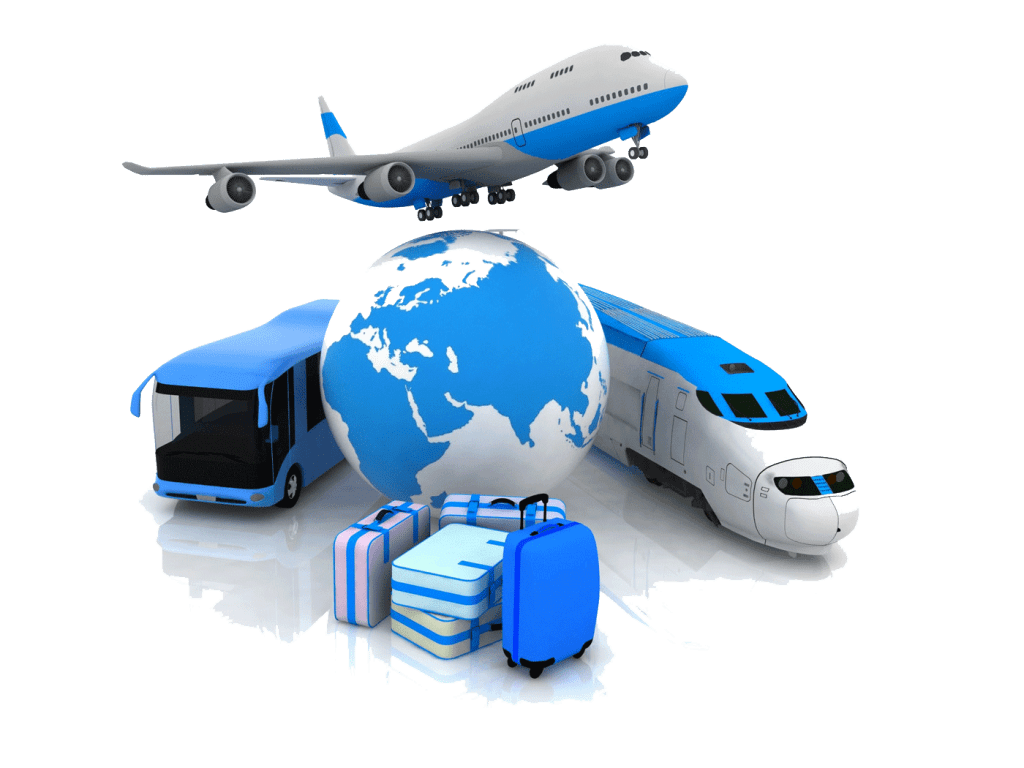
We use different materials and services in our daily life. Some of these are available in our immediate surroundings while other requirements are met by bringing things from other places. Goods and services do not move from supply locations to demand locations necessitates the need for transport. Some people are engaged in facilitating these movements. These are known to be traders who make the products come to the consumers by transportation. Thus, the pace of development of a country depends upon the production of goods and services as well as their movement over space. Therefore, efficient means of transport are pre-requisites for fast development. Movement of these goods and services can be over three important domains of our earth i.e. land, water and air. Based on these, transport can also be classified into land, water and air transport. expanded far and wide. Today, the world has been converted into a large village with the help of efficient and fast moving transport.
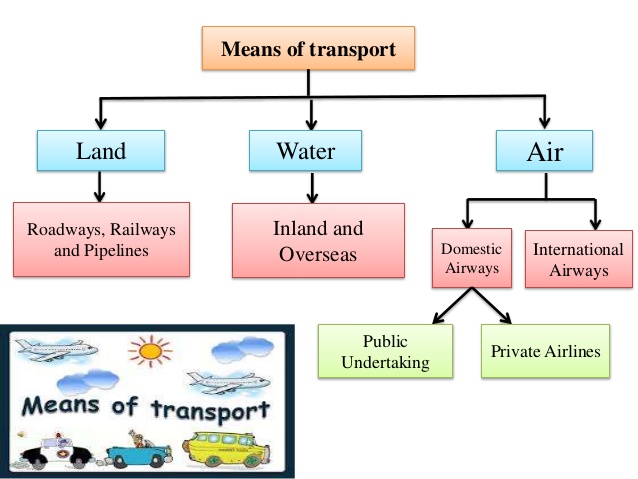
Transport has been able to achieve this with the help of equally developed communication system. Therefore, transport, communication and trade are complementary to each other. Railways, airways, water ways, newspapers, radio, television, cinema and internet, etc. have been contributing to its socio-economic progress in many ways. The trades from local to international levels have added to the vitality of its economy. It has enriched our life and added substantially to growing amenities and facilities for the comforts of life.
Transport plays an important role in the economy. Because of transport raw materials reach the factory and finished products reach to the consumer. The pace of development of a country depends upon the production of goods and services as well as their movement over space. Therefore, efficient means of transport are pre-requisites for fast development
TRANSPORTATION
Apart from transport, the ease and mode of communications, like telephone and internet makes seamless flow of information possible.
Today, India is well-linked with the rest of the world despite its vast size, diversity and linguistic and socio-cultural plurality. Railways, airways, water ways, newspapers, radio, television, cinema and internet, etc. have been contributing to its socio-economic progress in many ways. The trades from local to international levels have added to the vitality of its economy. It has enriched our life and added substantially to growing amenities and facilities for the comforts of life.
- Roadways
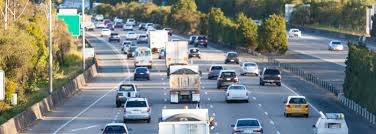
India has one of the largest road networks in the world, aggregating to about 2.3 million km at present. In India, roadways have preceded railways. They still have an edge over railways in view of the ease with which they can be built and maintained. The growing importance of road transport vis-à-vis rail transport is rooted in the following reasons;
- construction cost of roads is much lower than that of railway lines,
- roads can traverse comparatively more dissected and undulating topography,
- roads can negotiate higher gradients of slopes and as such can traverse mountains such as the Himalayas,
- road transport is economical in transportation of few persons and relatively smaller amount of goods over short distances,
- it also provides door-to-door service, thus the cost of loading and unloading is much lower,
- Road transport is also used as a feeder to other modes of transport such as they provide a link between railway stations, air and sea ports.
In India, roads are classified in the following six classes according to their capacity
- Golden Quadrilateral: The government has launched a major road development project linking Delhi-Kolkata- Chennai-Mumbai and Delhi by six-lane Super Highways. The North-South corridors linking Srinagar (Jammu & Kashmir) and Kanyakumari (Tamil Nadu), and East-West Corridor connecting Silcher (Assam) and Porbander (Gujarat) are part of this project. The major objective of these Super Highways is to reduce the time and distance between the mega cities of India. These highway projects are being implemented by the National Highway Authority of India (NHAI).
- National Highways: National Highways link extreme parts of the country. These are the primary road systems and are laid and maintained by the Central Public Works Department (CPWD). A number of major National Highways run in North-South and East-West directions.
- State Highways: Roads linking a state capital with different district headquarters are known as State Highways. These roads are constructed and maintained by the State Public Works Department (PWD) in State and Union Territories.
- District Roads: These roads connect the district headquarters with other places of the district. These roads are maintained by the Zila Parishad.
- Other Roads: Rural roads, which link rural areas and villages with towns, are classified under this category. These roads received special impetus under the Pradhan Mantri Grameen Sadak Yojana. Under this scheme special provisions are made so that every village in the country is linked to a major town in the country by an all season motorable road.
- Border Roads: Apart from these, Border Roads Organization a Government of India undertaking constructs and maintains roads in the bordering areas of the country. This organization was established in 1960 for the development of the roads of strategic importance in the northern and northeastern border areas. These roads have improved accessibility in areas of difficult terrain and have helped in the economic development of these areas
Road Density
The length of road per 100 sq. km of area is known as the density of roads. The density of all roads varies from only 10 km in Jammu & Kashmir to 375 km in Kerala with the national average of 75 km (1996-97).
- Railways
The Railways are the principal mode of transportation for freight and passengers in India. They also make it possible to conduct multifarious activities like business, sightseeing, and pilgrimage. Therefore, they play a major role in the transportation of goods over longer distances. Railways in India bind the economic life of the country as well as accelerate the development of the industry and agriculture.
Development of Railways
The Indian Railway is now reorganized into 16 zones. The distribution pattern of the Railway network in the country has been largely influenced by physiographic, economic and administrative factors. The northern plains with their vast level land, high population density, and rich agricultural resources provided the most favorable condition for their growth. Therefore, the railway network is well advanced in this area.
Difficulty in Laying Railways
Likewise, it was difficult to lay railway lines on the sandy plain of western Rajasthan, swamps of Gujarat, forested tracks of Madhya Pradesh, Chhattisgarh, Orissa, and Jharkhand. In recent times, the development of the Konkan railway along the west coast has facilitated the movement of passengers and goods in this most important economic region of India.
- Pipelines in India
REPORT THIS AD
Pipeline transport network is a new arrival on the transportation map of India. In the past, these were used to transport water to cities and industries. Now, these are used for transporting crude oil, petroleum products, and natural gas from oil and natural gas fields to refineries, fertilizer factories, and big thermal power plants.
The three major pipelines laid in our country are:
—From oil field in upper Assam to Kanpur (Uttar Pradesh)
—From Salaya in Gujarat to Jalandhar in Punjab
—Gas pipeline from Hazira in Gujarat connects Jagdishpur in Uttar Pradesh
Waterways
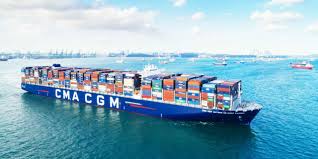
Waterways are the cheapest means of transport. They are most suitable for carrying heavy and bulky goods. It is a fuel-efficient and environment-friendly mode of transport. India has inland navigation waterways of 14,500 km in length. We have three National Waterways:
- The Ganga river between Allahabad and Haldia (1620 km)-N.W. No.1
- The Brahmaputra river between Sadiya and Dhubri (891 km)-N.W. No.2
- The West-Coast Canal in Kerala (Kottapurma-Komman, Udyogamandal, and Champakkara canals-205 km) – N.W. No.3
Airways

The air transport was nationalized in 1953. Indian Airlines, Alliance Air (a subsidiary of Indian Airlines) provide domestic air services. Private scheduled airlines and non- scheduled operators also provide similar air services. Air India provides international air services. Pawanhans Helicopters Ltd. Provides helicopter services to Oil and Natural Gas Commission in its off- shore operations, to inaccessible areas and difficult terrains like the north-eastern states and the interior parts of Jammu and Kashmir, Himachal Pradesh and Uttaranchal. Indian Airlines operations also extend to the neighboring countries of South and south-east Asia and the Middle East. It can cover very difficult terrains like high mountains, dreary deserts, dense forests and also long oceanic stretches with great ease.

 education